
Inclusive Dialogue


What good is a treatment if your patient won’t adhere to it?

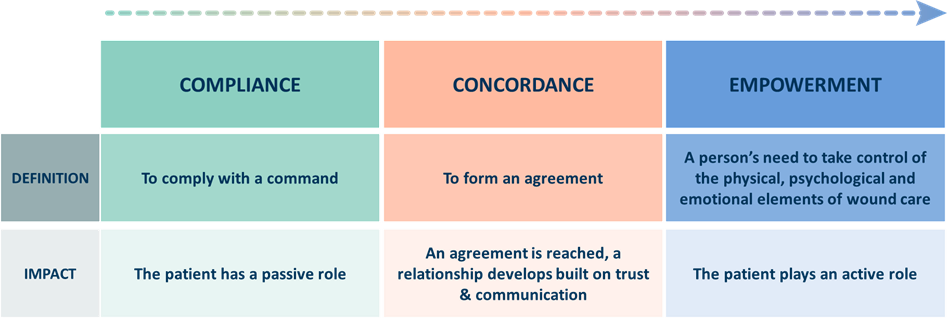
Some patients may perceive compression therapy or offloading as a MAJOR INCONVENIENCE, as it involves engaging with treatment for a LONG PERIOD OF TIME.1

Low adherence with therapy may results in DELAYED HEALING and poor healing outcomes2.

Healthcare professionnals have an IMPORTANT ROLE to play in explaining :

  • The aetiology,
  • Why the treatment is important
  • Why they should wear compression or offloading continuously
  • Etc

The objective is to enable them to play an ACTIVE ROLE IN THEIR CARE as much as possible.

It’s about moving patients from compliance to CONCORDANCE and, where possible, to promote EMPOWERMENT4
How to improve concordance, and therefore the healing outcome ?

The aim is to treat the person, not just the disease.

The quality of dialogue between the healthcare professional & the patient is key to ensuring that effective treatment is implemented.

The dialogue should also involve the patient’s caregivers, who may play a central role in their care.

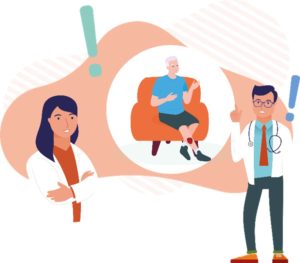
It’s about engage in Inclusive Dialogue with the patient, 
their relatives & other clinicians to ensure
full consideration of patient needs and continuity of care

How to implement inclusive dialogue with a patient presenting with a wound?

1/ Ensure that your patient feels part of the choices made through ACTIVE LISTENING

30% of our communication is verbal and 70% is non-verbal.  The goal is, to listen to the person and provide them with empathetic understanding.

There are also five steps that can help to implement active listening, the S.O.L.E.R method4:

Squarely face the person.

Open posture.

Lean towards the person.

Eye contact.

Relax.

But the key is to adapt to the patient AND to their disease.It is important look at the patient and take into consideration:

  • Physicial abilities
  • Cognitive abilities
  • Psychosocial environment

The key question is what is my patient capable of accepting and doing ?

Example of questions to ask for a leg ulcer patient6:

  • What is the worst thing/most painful about your leg ulcer?
  • Do you have any worries about your treatment plan?
  • Explain to me how is it affecting your life.

2/ Always explain the rationale for the decisions that are made and the role they can play, through PATIENT EDUCATION TOOLS

Have a look at our LEGS GO! and SAVEFEETSAVELIVES programs which aim to promote inclusive dialogue

References

1- Van Hecke A, Grypdonck M, Defloor T. A review of why patients with leg ulcers do not adhere to treatment. J Clin Nurs. 2009; 18(3):337–49. https:doi.org/10.1111/j.1365-2702.2008.02575.
2- Nelson EA, Bell-Syer SE. Compression for preventing recurrence of venous ulcers. Cochrane Database Syst Rev 2014; 9: CD002303. https://doi.org/10.1002/14651858
3- Brooks J, Ersser SJ, Lloyd A, Ryan TJ. Nurse-led education sets out to improve patient concordance and prevent recurrence of leg ulcers. J Wound Care. 2004; 13(3),111-116
4- Bianchi J, Flanagan M, King B. 3D: a framework to improve care for patients with leg ulcers. Implementing person-centred diagnosis, evidence-based treatment decisions and inclusive dialogue with the 3D framework. J Wound Care 2020; 29 (11 Suppl a):S1–S66
5- Egan, 1986
6- The principles of holistic wound assessment, November 2015 Nursing Times 111(46):14-16

Evidence Based Treatment Decision

Evidence-based treatment decision

Why do Health Care practitioners need evidence?

There is a need to do the ‘right thing’ and /or what is ‘best’ for patients but also there is a need to standardise practice.

How to make best treatment decisions?

The objective to any treatment decision is to improve patient outcomes should it be healing and/or quality of life. Evidence Based Practice can support clinical decision in daily practice.

What is Evidence Based Practice ?

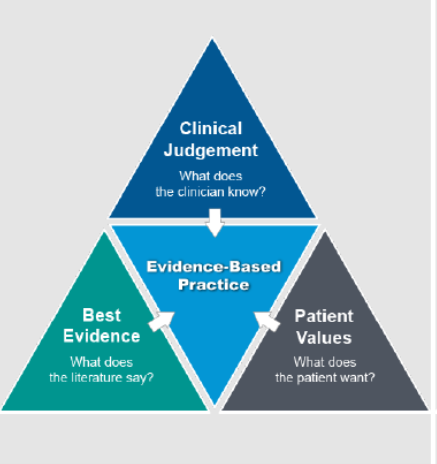
It is the integration of best research evidence with clinical expertise and patient values [Sackett 2001]

– Clinical judgement is acquired through clinical experience and practice.

– Patient values can be assessed through an Inclusive Dialogue with him and/or its caregivers

– Best evidence can be observed from the literature


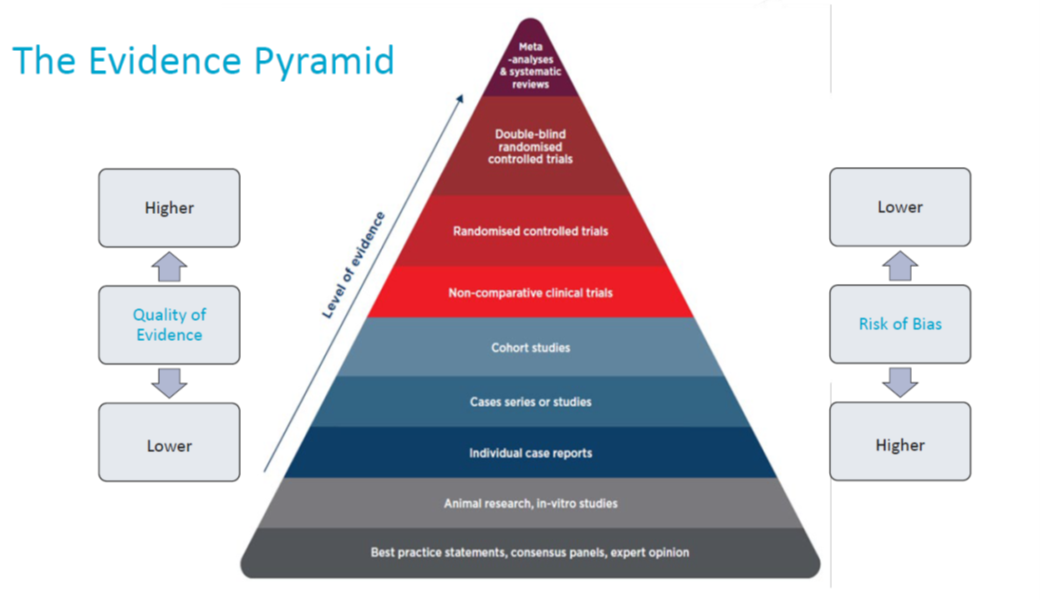
But not all Evidence is equal :

  • Some sources of evidence are stronger than others
  • Study design play an important role in the quality of the evidence
  • Each source of evidence has a specific objective and role to play (ie only RCT – randomised controlled trial can prove the efficacy of treatment)

The critical analysis of the evidence is an essential skill for healthcare professionals. The Evidence Pyramid can help in assessing the quality of the evidence and the risk of bias.

Evidence has therefore a key role in healing patients sooner.

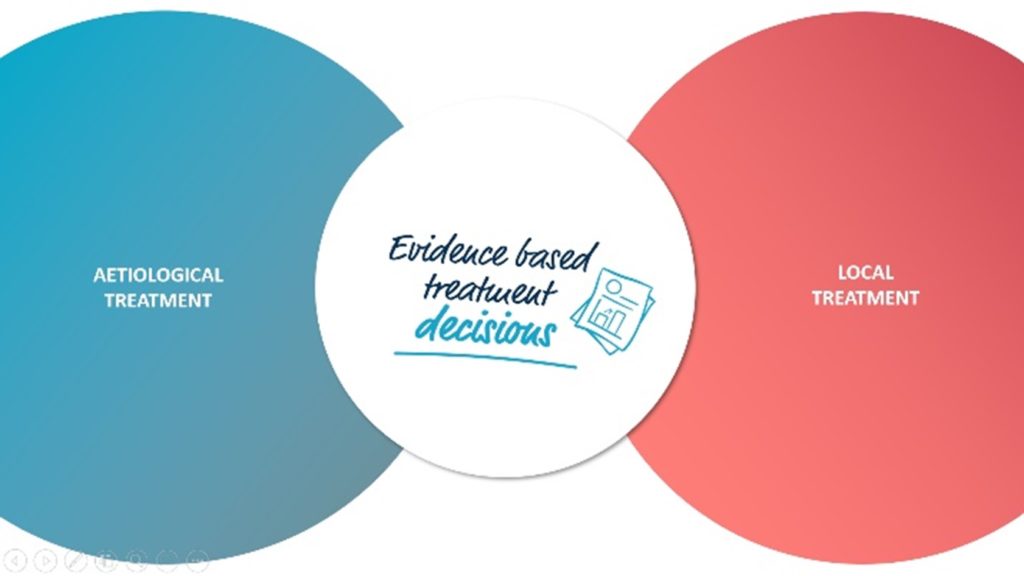
In Urgo Medical we are committed to provide Healthcare Professionals with the best Standard of Care from the beginning so that life can start again for their patients. The standard of care for patients includes a local treatment and an etiological treatment to provide them the best outcomes.

Local care : once the risk of delayed wound healing (comorbidities, risk or local signs of infection) is identified through a Patient-centred Diagnosis, a local treatment can be prescribed :

  • If a patient presents with a risk of infection or signs of local infection, a combined antimicrobial and complete cleaning action is required in order to clean the wound from all the elements that support and increase the risk of infection (microbes, exudate, biofilm, slough & other wound debris) – UrgoClean Ag (add link)
  • If a patient presents with comorbidities (diabetes, venous insufficiency, advanced age, etc) but no risk or signs of local infection, a specific local treatment from day one is required that will continuously clean, effectively heal and close the wound as soon as possible – avoiding further complications. (UrgoStart Plus – add link)
  • With patients with no comorbidities nor risk of infection, the objective is to provide and maintain a moist environment locally while ensuring painfree cares. (UrgoTul range – add link)

 Etiological treatment : in patients presenting with with diabetes, venous insufficiency or limited mobility, an etiological treatment is necessary to ensure healing.

For patients with a venous leg ulcer: the recognized STANDARD OF CARE is compression therapy.1-3

Yet there are many challenges to overcome to select the best compression treatment:

CONTINUOUS

A continuous pressure 24/7

CONSISTENT

An application that is accurate and repeatable at 40mmHg at the ankle

COMFORTABLE

A compression that patients can wear


Our Dual Compression Systems in Urgo Medical are designed to provide your patients with continuous, consistent and comfortable compression. Their efficacy has been demonstrated in multiple studies with a high level of evidence.

References

1- O’Meara S, Cullum N, Nelson EA, Dumville JC. Compression for venous leg ulcers. Cochrane Database Syst Rev 2012; 11: CD000265. https://doi.org/10.1002/14651858
2- Wittens C, Davies AH, Bækgaard N et al. Editor’s choice: management of chronic venous disease: clinical practice guidelines of the European Society for Vascular Surgery (ESVS). Eur J Vasc Endovasc Surg. 2015; 49: 678–737. https://doi.org/10.1016/j.ejvs.2015.02.007
3- Franks PJ, Barker J, Collier M et al. Management of patients with venous leg ulcers: challenges and current best practice. J Wound Care. 2016; 25(Suppl. 6): S1–S67
4- Pearls for Practice, Addressing the 3Cs of compression: Continuity, Consistency and Comfort Through the use of a Novel Dual Compression System, June 2020, Symposium on Advanced Wound Care
5- Pilati L., Houserman D., Comparing 2-layer with traditional 4-layer compression therapy. Pearls for Practice. 2020 April. Vol 66, no. 4
6- Lantis JC 2nd, Barrett C, Couch KS, Ehmann S, Greenstein E, Ostler M, Tickner A. A dual compression system: preliminary clinical insights from the US. J Wound Care. 2020 Sep 1;29(Sup9):S29-S37

Patient Centred Diagnosis


Each patient is different and needs the right treatment from the start.

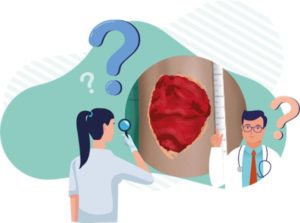
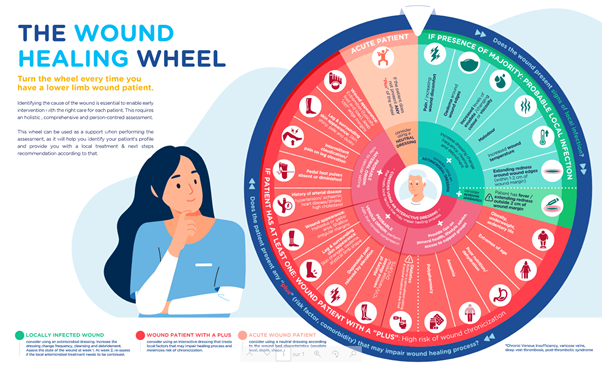
Identifying individual patient needs through a holistic assessment of the patient, his/her wound, its aetiology, associated co-morbidities and the patient’s lifestyle is key to implement the right treatment from the start and ensure best patient outcomes. Considering their risk factors of impaired healing, all patients with wounds can fall into one of these categories:


  • Patients with risk factors (“Patients with a plus”): Patients presenting with risk factors like advanced age, diabetes, vascular factors or reduced mobility amongst others. These patients and their wounds can look very different from one another, going from daily, acute wounds (i.e. burns, cuts…), post-operative wounds, to ulcers (i.e. leg ulcers, diabetic foot ulcers, pressure ulcers). However, because of their underlying conditions they all have in common a high risk of delayed healing and complications. Thus, the priority is to identify these patients early, refer them as soon as possible to a specialized setting and to provide them with a specific care protocol that will help treat their underlying causes, close their wounds as soon as possible and avoid complications.
  • Patients with no risk factors (“Young, healthy patients”): Patients that do not present any risk factor of impaired healing, and therefore have a low probability of delayed healing and complications. The wounds that these patients present can vary from daily, acute wounds (i.e. burns, cuts…) to post-operative wounds. The priority when managing these patients is  to maintain a moist environment locally for a good healing trajectory while ensuring painfree care.

At Urgo Medical, we see ourselves as ‘the healing company’, and so we believe in medical training for improving care and treatment for patients. Accordingly, we have developed a new assessment tool, the Wound Healing Wheel, to accompany clinicians in their daily practice. This wheel can be used as a support when performing the assessment, as it will help identify a patient’s profile and thus accordingly provide recommendations for local treatment and next steps.

Urgo Medical Education

We believe each patient is different and deserves the appropriate treatment for their wounds.

As a partner to help health care professionals get the support and training they need, Urgo Medical Education is the new education program by Urgo Medical.

Our priority is to empower health care professionals to improve patient outcomes by delivering the best solutions from the beginning so that life can start again for their patients.

For this we have collaborated with leading wound treatment experts to design a program that is tailored to health care professionals’ specific needs with the objective to heal more patients sooner.

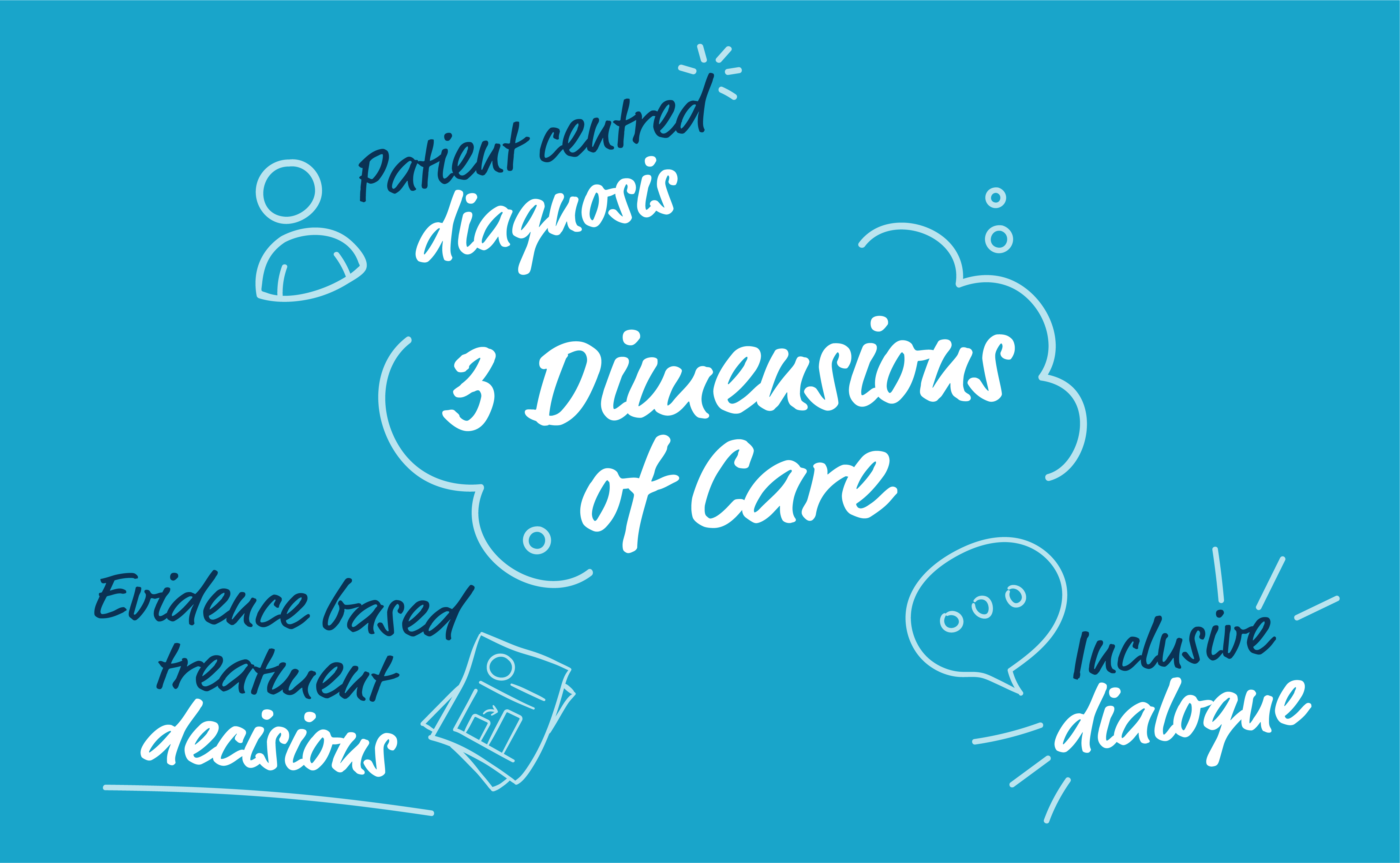
With Urgo Medical Education we aim to train on the 3 Dimensions of Care.

3 dimensions of care that are, according to leading wound experts, 3 necessary steps for an effective and safe management of patients presenting with a wound.

Effective management includes a holistic assessment of the patient (comorbidities, wound, etc)     

Treatment decision should aim at improving quality of life and closing the wound as soon as possible 

Making patients become  actor of their healing and & pathology


Beyond general content on the 3 Dimensions of Care, on Evidence-Based Medecine or on principles on wound healing, Urgo Medical Education offers as well specific wound care training courses related to :

Urgo Medical Education offers general as well as specific wound care training courses related to:

Leg ulcer

Diabetic foot ulcer

Pressure ulcer

Infection Control

Acute wounds

Epidermolysis Bullosa

All this to support you in your daily practice.

Each pathology training course is structured on the 3 Dimensions of Care, therefore learners will be able to deep dive into the specifities of each dimension for a specific pathology.

International & national recommendations, clinical evidence, cost-effectiveness, best practices and practical tips are core elements of our trainings. We developed these trainings with renowned experts in their field and the content is endorsed by leading Scientific Societies.

With Urgo Medical Education, you’ll have the opportunity to join presential training but as well digital training through our dedicated Education app and website. You’ll be enjoying online gamified training & more.

How to join the community ?

 >> Coming soon, stay tuned !<<


You can also contact your local Urgo Medical representative to know more about the next sponsored events organized in your country.